
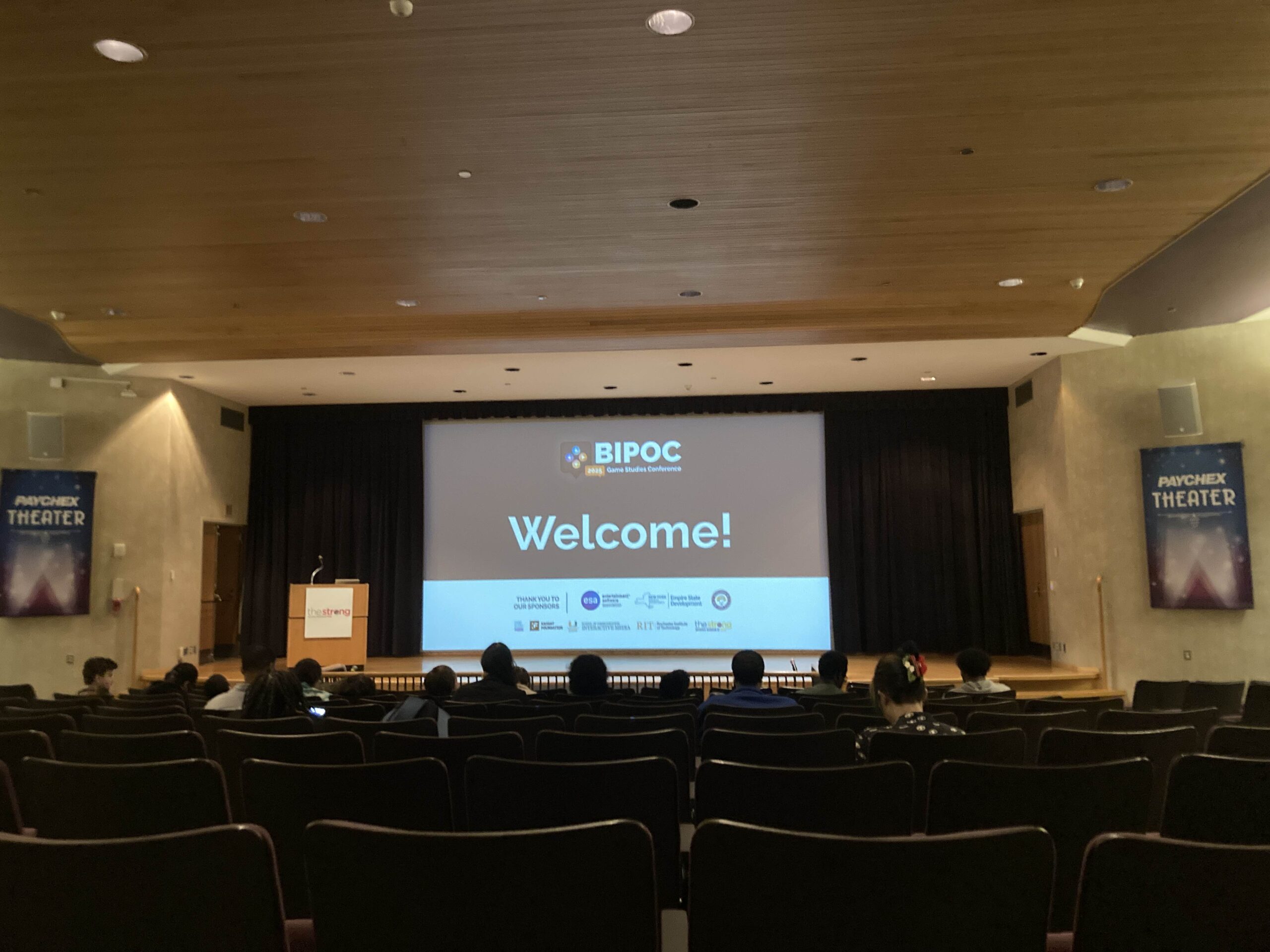
This collaborative essay brings together seven participants to reflect on their observations and experiences at the 2025 BIPOC Game Studies Conference at The Strong National Museum of Play in Rochester, NY. The conference ran from September 12-14, 2025, and according to the conference website,
is an event dedicated to exploring the intersection of gaming culture, technology, and the experiences of BIPOC communities worldwide. Our aim is to provide a space for scholars, game developers, industry professionals, and enthusiasts to engage in critical discussions, share research findings, and foster collaboration in the field. This conference brings together peer-reviewed research from leading academics, perspective from industry and fosters community among consumers, game-makers and academia.1
* * *
Welcome
—Mirek Stolee, The Strong Museum
Just over a year ago, I started my position as curator for tabletop games and puzzles at The Strong National Museum of Play. My background was primarily academic, teaching game design and doing game studies research. Like many folks in game studies, I came to the field through a roundabout route. It wasn’t until the senior year of my undergrad that I even learned that academics studied games. At the time, of course, “games” meant “video games” to me. Yet, I had also fallen deep into collecting and playing hobbyist board games in my personal life. I spent many sleepless nights in high school playing Arkham Horror with my friends, and played Dominion nearly every day in college, but had never considered that people were studying analog games. So, discovering the Analog Game Studies journal (AGS) was a revelation. I first encountered it when my master’s thesis advisor, Nathan Altice, sent me his article examining playing cards as a computational platform. I’ve since attended the AGS’s online Generation Analog conference several times, starting with the first one in 2020. The AGS community is among the most welcoming academic groups I’ve encountered.
At the inaugural BIPOC Game Studies Conference, I had the pleasure of finally meeting several members of the AGS staff and giving them a tour of The Strong’s collections. At the AGS roundtable, it was fascinating to learn how AGS has so intentionally cultivated its community through a spirit of mentorship and collaboration. By eschewing double-blind processes for a collaborative model between author and editor, AGS has been instrumental in cultivating the skill sets of junior scholars and marginalized authors and making scholarship on analog games freely available and accessible to readers both within and outside of academia. Yet, the practices that have made AGS so accessible have sometimes made it illegible to entities like tenure committees. It’s challenging advocating for research that is undervalued by existing institutional structures.
The AGS roundtable had me reflecting on my own advocacy capabilities in a position outside of traditional academia. This past year, I’ve been thinking about my role at the museum and what I can do for the creators, players, and scholars of analog games and puzzles. Working at a museum gives me unique opportunities for sharing game history and historiography with public audiences. The Strong’s broad definition of play means that our collection includes toys, video games, art, ephemera, clothing, and many more categories. This puts our institution in a unique position for drawing connections between various forms of play, but it also means that we are trying to cover a lot of bases. As one of several curators, it’s my job to advocate for the collection, display, and interpretation of analog games and their communities. Speaking with the AGS staff helped me develop ideas for diversifying my part of the collection. The indie TTRPG space is one area that I’d like to build out further, for instance. So many exciting games come from marginalized folks working within TTRPGs, and The Strong should be collaborating with creators and players to preserve those materials.
AGS has shown me how institutions like journals and conferences can be powerful advocates for marginalized players, creators, and scholars. At the museum, we are already thinking about how we can continue hosting the BIPOC Game Studies Conference in future years. While I was not heavily involved with the organization of this year’s conference, it was a joy to attend. The issues of representation and identity discussed at the conference are crucial for gaming culture, both analog and digital. I hope to ensure that diverse designers and scholars of analog games have an even greater presence at future conferences. I can’t wait.
* * *
(Un)Learning through Play
—Megan Condis, Texas Tech University
I was so impressed by this event and even more so by the hosting institution. The Strong Museum of Play is truly a treasure, and between the panels, the game demos, attending the keynotes, and just wandering around the museum and seeing folks learning about/through play was extremely generative and inspiring.
I want to give a special shout out in these notes to Elaine Gómez, Dan Cook, and Roxanne Blouin-Payer for their talk “Decolonizing Play: Frameworks for Game Design Free of Colonial Values.” Their talk explored how imperialist and colonialist logics can sometimes infiltrate play in unintentional ways, even in games that don’t feature violent themes. For example, many of the core game design verbs that we rely on, such as the “four X” verbs (explore, expand, exploit, exterminate), as well as genre-defining verbs like loot, conquer, control, capture, and manage, revolve around the exercise of power and the subjugation of people and spaces. I highly recommend that you read their paper in the conference proceedings (available here: https://works.hcommons.org/records/vfk96-nwk35).
The talk, which was informed by their experiences as commercial game designers, outlined a four-step framework for game designers to think through their projects in order to discover these patterns where they arise and create new frameworks where possible. The first step is to assess the risks associated with your game, determining whether it falls into a genre or is associated with a franchise that has had a tendency to rely on colonial values in the past. Games in high-risk genres like strategy games, survival games, MMORPGs or factory/automation games will require extra thought and care as players will have become used to existing patterns of interaction and will require extra scaffolding to move away from them.
The second step is to look for places in which your project is flexible, the places where your game is still able to be changed and the places where it can no longer be easily modified. Coming from a commercial game design space, the speakers discussed how, depending on how far along a game is in its development, certain elements such as game mechanics that have already been announced to the public or economies of monetization may already be “baked in,” while other elements, like the design of assets or the storyline, may be more open to change.
Next, they recommend game developers brainstorm a list of “antonyms” to the gameplay verbs that they wish to change. Perhaps “control” can be reenvisioned as “liberate,” “exploit” can become “preserve,” or “loot” can transform into “restore.” Finally, they recommend getting feedback from other people about your design, including professionals like sensitivity readers and cultural consultants as well as players.
What struck me most strongly about the talk was their definition of decolonization, which they described as “unlearning to relearn.” This got me thinking about how their framework might be applied to the classroom. What exploitative logics might we be importing into higher education that we aren’t aware of? What places are we able to create change immediately and without the need for institutional support (which, in our current political climate, may or may not be forthcoming)? What new interactions can we foster for our students and how might we gain valuable feedback from them about how they perceive the college experience?
Many thanks to the conference organizers, the Strong, and the city of Rochester for the fantastic event!
* * *
That “Aha” Moment
—Amanda Kporwofa, University of Cincinnati
When my professor first mentioned the BIPOC Conference to me, I was genuinely excited. It was the first conference of its kind dedicated specifically to people of color in game studies and design, a welcoming and inclusive space to connect with other game designers like me. I immediately saw it as an opportunity to learn from diverse voices, share experiences, and understand how other creators use games as a medium for storytelling and cultural expression.
When I finally arrived, I was amazed to see a vibrant mix of creators showcasing their works, from analog board games to digital and video games. Each presentation carried a unique signature of the creator’s background, history, and environment. As a game designer from the Global South, I was deeply inspired by how each designer’s work reflected their geographical and cultural context. That moment gave me an “aha” realization: I could intentionally design my games to represent and center the Global South, including its stories, cultures, and lived experiences. Seeing how others used their games to explore themes like identity, race, history, and belonging encouraged me to think more deeply about how games can be a form of research, cultural preservation, and resistance.
One of the sessions that left a lasting impact on me was the “Diversity, Citational Justice, and Analog Game Studies” roundtable featuring Dr. Edmond Chang, Dr. Evan Torner, Dr. Megan Condis, Dr. Shelly Jones, and Luke Hernandez. The discussion emphasized the importance of collaboration in both game creation and research. As someone who had always designed games independently, hearing that game designers could come together, combining different skills, perspectives, and disciplines, was transformative. It expanded how I view game development, not just as a creative practice but also as a collective intellectual process. This insight has already led to a new collaboration I am currently pursuing with one of the renowned game designers I met at the event. Working together has shown me that collaboration allows for the creation of more layered and representative games that speak across cultures and disciplines.
After the session, I had meaningful conversations with Dr. Torner, my professor and mentor, and Dr. Condis, who both encouraged me to continue developing games rooted in the Global South context. They reminded me that people from the Global South understand their cultures and lived experiences best and that our voices are essential in diversifying global game design. This insight has significantly shifted my research focus toward Global South-centered game scholarship, where I aim to explore how culturally grounded games can challenge dominant Western narratives in game studies. I was especially thrilled to leave the conference with a clear idea for my future dissertation, inspired by these conversations and the broader discussions throughout the event.
Overall, the BIPOC Conference was an eye-opening and empowering experience. It affirmed my identity as a game designer from the Global South and strengthened my commitment to creating culturally grounded games that speak to local realities while contributing to global conversations in environmental and educational game design. Beyond that, it reminded me that representation matters not only in the stories we tell through games but also in who gets to design them. The conference left me motivated to continue using my creative and scholarly work to amplify underrepresented voices, build collaborations across continents, and redefine what inclusive and globally conscious game design can look like.
* * *
Playful Studies
—Shelly Jones (they/them), SUNY Delhi
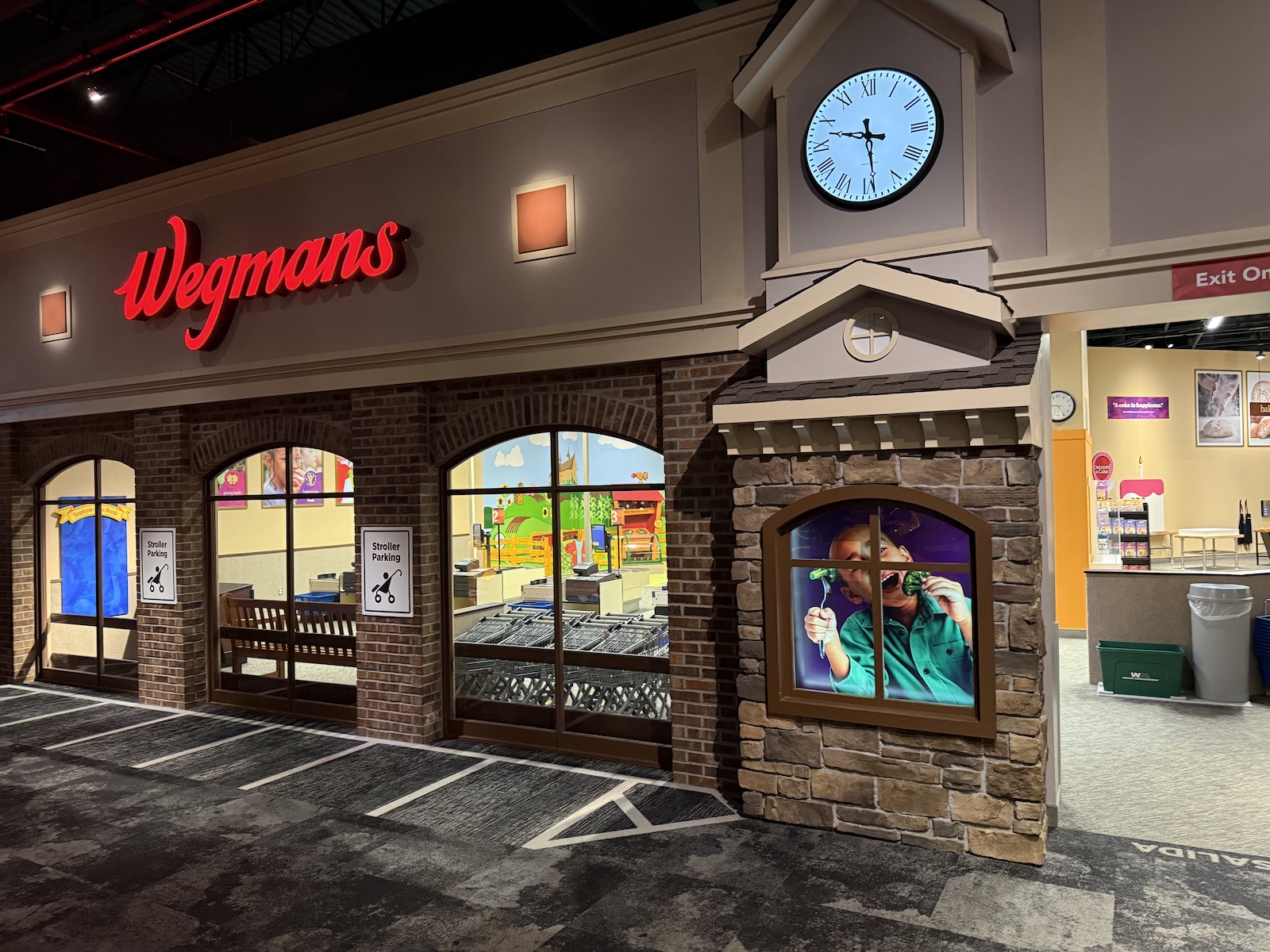
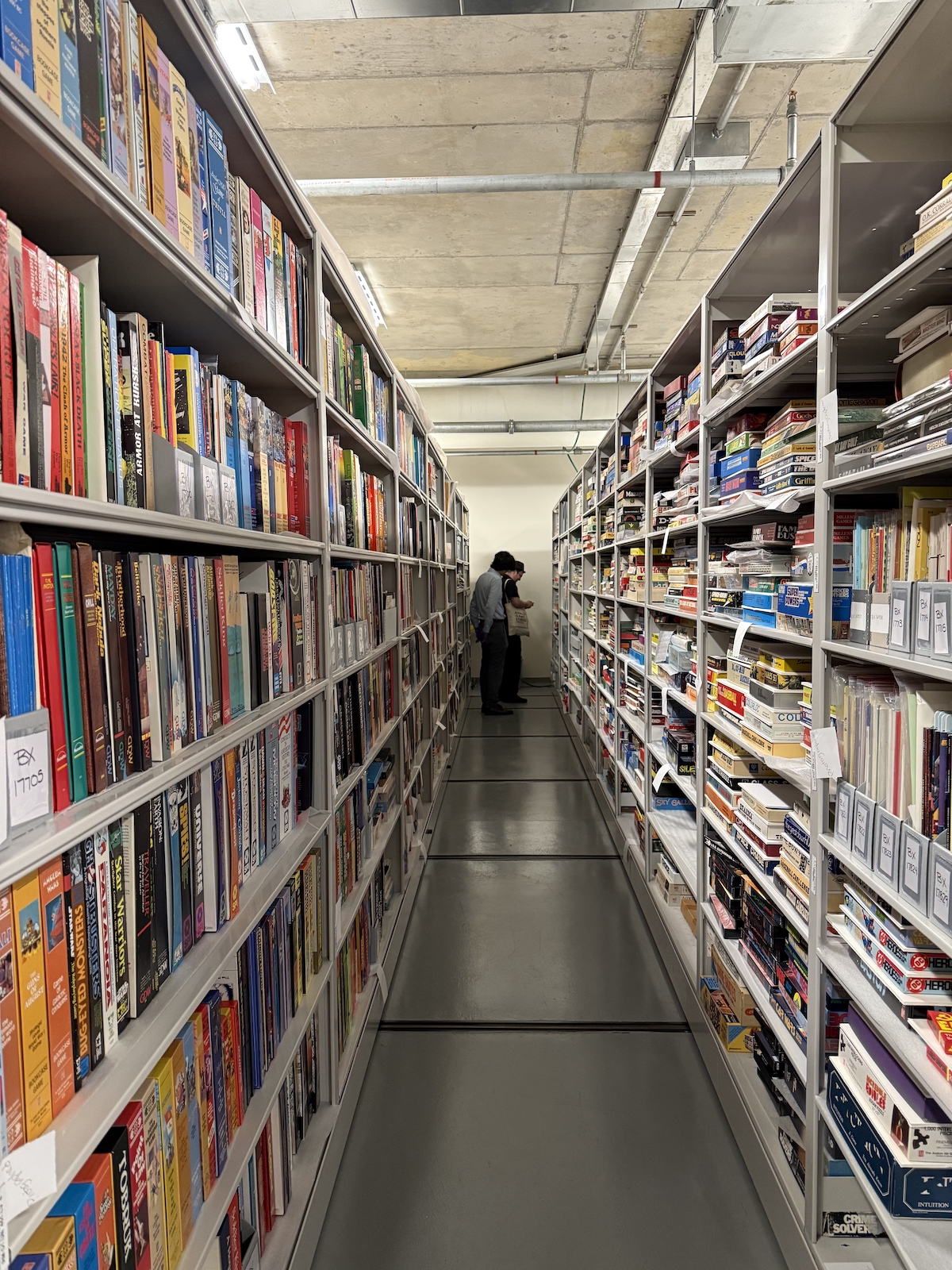
Throughout the conference, we heard themes of revisiting the past to inform and produce the future. For me, a native of Rochester, I felt as though I were a living embodiment of homesickness, past remembrance, and hopeful possibilities. I have fond (albeit hazy) memories of the Strong Museum, having visited there as a child. Walking through that familiar, yet much-changed, space was rather surreal. Here I was, an adult, revisiting a museum that heralds the importance of play, that documents the way we play, remembering being a child, dazzled by all the exhibits. But now, not only am I an adult, but I’m an adult who studies play and games, so I walked through the exhibits (particularly the miniaturized Wegmans market) with academic eyes rather than simply child-like wonder. But I still felt that sense of awe, especially as a few of us were taken on a behind-the-scenes tour of the collection: row after row after row of games, toys, action figures, books. Throughout the tour, we’d all invariably shout, “I had that when I was a kid!” or “I remember those!”—our bodies aching with delight and nostalgia, our minds buzzing with ideas for future studies and essays.
Resurfacing from the archives and our heady trip down memory lane, the conference all at once felt safe, collaborative, and deeply personal. At each panel, the person and the human were at the center of it all. We may have been discussing chits and code and rules, but really we were discussing humanity, identity, and community. Real human connections and support were made, like when an established Black woman in the games industry stood up to applaud the next generation of scholars, admiring their willingness to speak out, to point out injustices, to advocate for more inclusive representation and practices. To keep going.
Another aspect of the conference that struck me was the variety of types of talks: industry-focused keynotes; talks expressing the way that making games have impacted their lives; talks analyzing games as tools for socio-political revolution; and so much more. The AGS crew presented a roundtable on diversity and citational justice. That dialogue morphed and transformed into an open discussion on professionalization that too often goes unsaid. Breaking down some of the hidden curriculum of academia, those implicit expectations that often further alienate already marginalized folks, is its own kind of justice and empowerment: a practical one.
Ultimately, when I look back on this conference in years to come, I may not remember the theoretical nuances and underpinnings of every paper and talk, but I will remember the safe space we shared, the wonder and awe we experienced, the connection we found in one another through play.
Echoing others’ thanks to the conference organizers, the Strong, and the city of Rochester for such a welcoming and supportive event!
* * *
Lived Experiences
—Luke Hernandez, The University of Texas at Dallas
Over the years we are constantly reminded about aspects of games and media remain hostile towards BIPOC communities. It gets frustrating to still see how gaming culture and industry are not receptive to the lived experiences of marginalized communities and the vast systemic issues throughout gaming. What I appreciate is the way the Conference on BIPOC Game Studies holds space for people’s work that addresses these very issues while also doing the work itself by cultivating an inclusive event that dares to look towards a joyous future for all folks.
As a scholar from Texas that focuses on Queer and Latinx communities in gaming, I absolutely felt at home during my time at the conference in Rochester, NY. I was thoroughly engaged in the conference from listening to people’s research that centers marginalized experiences and discussing ways aspiring creators navigate the gaming industry as BIPOC. Events like these are becoming so important, especially considering recent political uncertainty such as efforts to target initiatives that aim to uplift our communities.
The Conference on BIPOC Game Studies offers not only a crucial space to promote solidarity between game makers, game players, and game scholars but across various communities where our differences and similarities are celebrated while working to address change and challenging the many harmful systems that color our experience.
I had the opportunity to meet so many amazing people at the conference and was able to reconnect with old friends. Shout out to my colleague and friend Diamond Beverly-Porter, who is an Assistant Professor at Washington State University! We met in Dallas as master’s students, and now we are eating at a bar and grill playing Mario Kart in upstate New York—life is strange. Her work includes Critical Game Studies and creating digital games that speak the experience of marginalized communities, specifically Black women, on negotiating identity, resistance, and futures! Seeing work like that in a dedicated space for these types of stories is truly inspiring to me as both a researcher and gamer.
All in all, events such the Conference on BIPOC Game Studies are important to shifting the culture and working towards just futures. While there were serious matters being addressed at my time at Rochester, I had a joyous time hearing other people’s creative and scholarly work and connecting with people who are passionate about making games more inclusive and accessible for everyone. I hope it continues.
* * *
Coalitions
—Evan Torner, University of Cincinnati
I can start with the vibe: resigned, but determined. Every institution of origin for every presenter, be it university, business, or even the Strong Museum itself, is now under a dark cloud of uncertainty; ideological pressure that disallows so many of us from fully serving our constituent populations. We continued to assert that what we do matters but, at least in our own panel and the talk by Elisabeth LaPensée, we felt safe in the space to open up about our trauma as well. By revisiting and sharing our pasts, we help produce the future in which we can better protect ourselves and our communities. That’s the hope, anyway.
As is often the case, I had to attend with my son, because leaving my partner alone with 2 children to care for is too big of an ask during the beginning of the school year. As it turns out, there is no better place to bring your kid to a conference than the Strong Museum of Play. There are rooms dedicated to virtually every aspect of human play, from pinball machines to carousels, from dollhouses to mystery rooms. My son had an absolute blast when we weren’t in the conference sessions or keynotes, to which he also listened. Moreover—and this is really important to someone like me who still harbors shame and embarrassment about needing to bring my children into rarefied academic spaces—he was treated very well by fellow conference attendees and the organizers. It reflects well on everyone when children are respected and valued, even when their inclusion isn’t always foreseen.
Gaming spaces haven’t been safe for BIPOC for a long time, nor have they been particularly accepting of parents, nor anyone different from a perceived identity norm. But concerted efforts and intentional organizing can begin to change that. The resigned-but-determined attitude underlying the conference makes me think there is much more to come from this coalition, and we should all contribute to its efforts to bring about the better future we all deserve.
* * *
Better Than a Garbage Plate
—Edmond Y. Chang, Ohio University
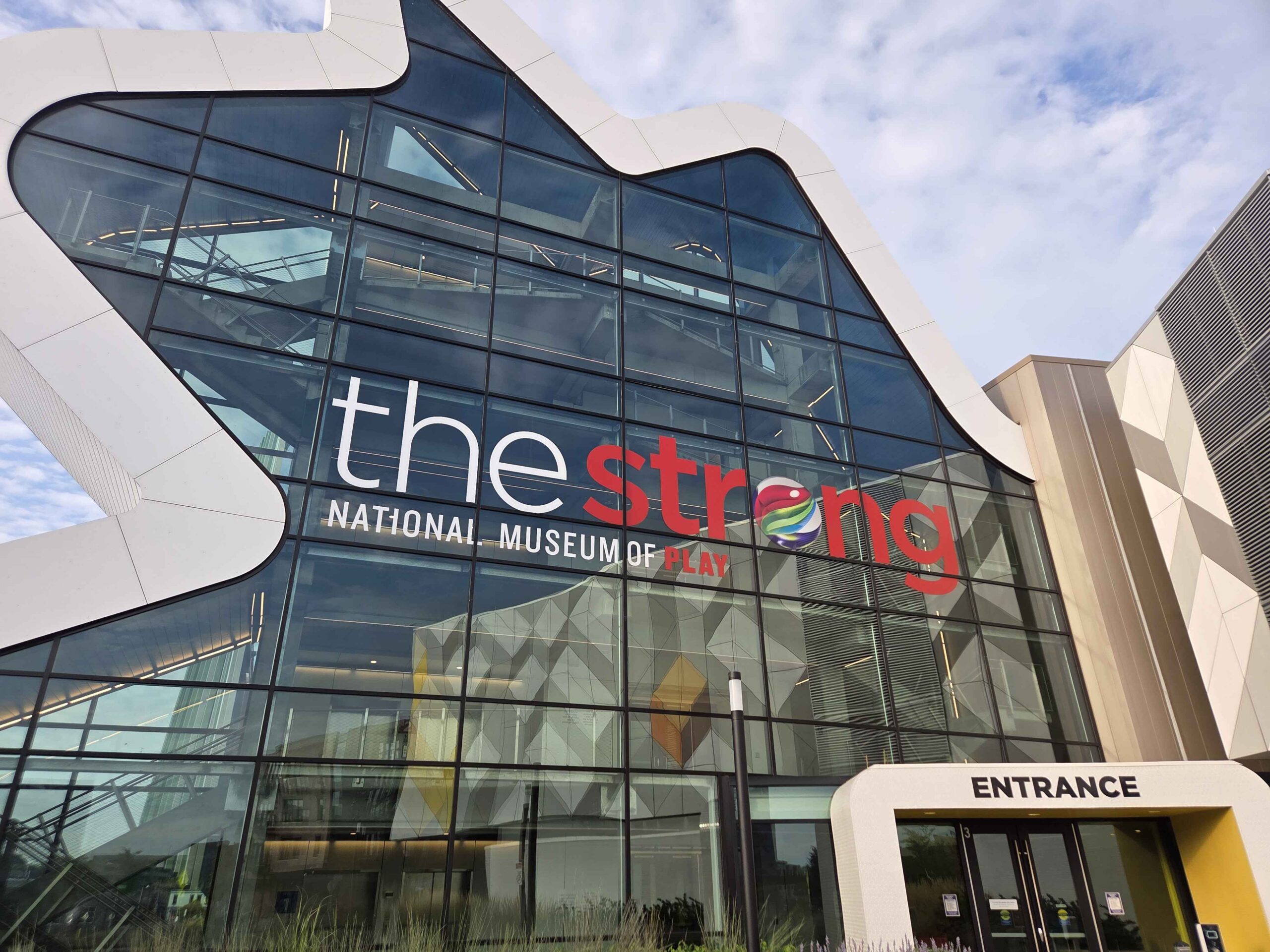
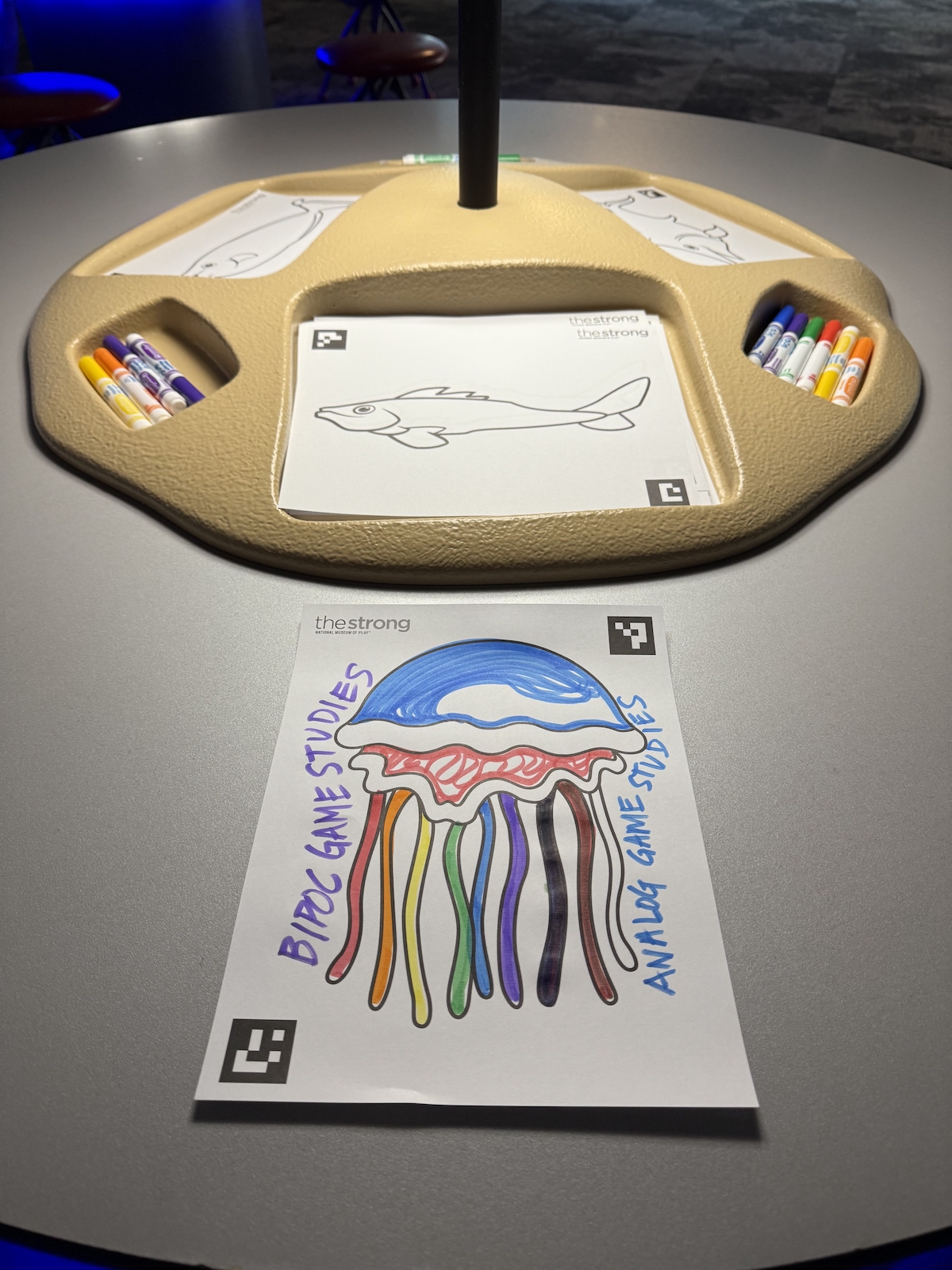
The unexpected. Mixed with color, wonder, and a healthy dose of nostalgia. My first visit to The Strong National Museum of Play evoked a lot of ideas, questions, feelings, even memories for me. The building itself, newly renovated and expanded in 2023, is a brightly-hued kaleidoscope of planes, shapes, textures, volumes, and installations from the giant, glowing squiggle of the “Portal of Play” that marks the front entrance to the 18-foot high Dungeons & Dragons fire-breathing dragon to the rainbow exterior of the museum’s parking garage. Inside, The Strong amazed me with the 123 Sesame Street stoop, the 3000-square-foot-child-sized Wegmans Super Kids Market, and a labyrinth of exhibits about superheroes, Black doll designers, board games, video games, and more. I think my favorite was the Rainbow Reef “digital aquarium,” where visitors (of all ages) can color a fish, scan it, and watch it magically appear swimming around the projected coral reef. (I made two.) I was impressed by how space and place, form and function, design and play really worked in The Strong.
Perhaps the most intense experience of the museum was getting to peek behind the scenes, to delve its depths like some fantasy adventuring party. Thanks to Mirek Stolee, a curator at The Strong and Analog Game Studies (AGS) alum, some of the AGS editorial board got to explore the museum’s archives, which includes toys, undoubtedly haunted dolls (kept safe in locked cabinets), magazines, catalogs, comic books, prototypes, game show paraphernalia, and all sorts of digital and analog games. Especially impressive and important is the Brian Sutton-Smith Library and Archives of Play, which houses so many TTRPG rulebooks and game materials. Even with the expansion, the museum seemed chock full, and we talked about all of the things that get acquired or donated, how and what gets chosen for preservation, and ultimately, what gets lost or destroyed. (I thought about my own collection of games, books, and writing, and wondered if someday, if I was so lucky and honored, they might make their way to The Strong or some other archive.) Recently, I just learned that Sutton-Smith Library has partnered with Play Story Press, who published all of AGS’s books, to collect physical and digital copies of PSP’s current and future catalog including Analog Game Studies. In a way, the archives themselves were about play, exploration, unexpected discoveries, histories, and connections. I could spend a lifetime playing around in the past-, present-, and afterlives of all of these much-handled, hopefully cherished things. (Just not the creepy dolls.)
I linger on the setting because not only did it genuinely surprise me, but it was the perfect venue for a game studies conference. The conference was unexpected, too. Much of the programming focused on video games, digital storytelling, and educational technologies—not a surprise given that the conference was organized by Dr. Lindsay Grace, Knight Chair in Interactive Media and professor in the School of Communication at the University of Miami, and Stephen Jacobs, Scholar-in Residence at The Strong and Professor of Interactive Games and Media at Rochester Institute of Technology (RIT), with sponsorship from The Strong, the Entertainment Software Association, the Knight Foundation, and others. However, I was hoping for some more mixing of digital and analog—especially since the site combines both—but I was thrilled to see so many different people, talks, institutions, and objects of study in the program. Highlights included the undergraduate students that presented on “Decolonial Frameworks and Indigenous Voices” (though they ran out of time due to no fault of their own), the panel on “Race, Representation, and Resistance in Story-Driven Games,” the session on “Community, Design, and Play Cultures” (which featured AGS’s Luke Hernandez), and especially, the keynote by Elizabeth LaPensée. I was especially edified to know that AGS was included in the program and would be repping analog game studies at the conference.
Our panel, entitled Diversity, Citational Justice, and Analog Game Studies: A Roundtable,”2 brought together some of the editorial board of Analog Game Studies to cover the current state of game studies scholarship, publication, professionalization, as well as the intersections with game design, industry, technology, and popular culture. In particular, the roundtable specifically addressed the need for further citational diversity and justice; while game studies as a field is growing and changing, we argue that much of game development, marketing, and criticism is still largely white, normative, and homogenous. Our panel highlighted the ways that AGS has tried to encourage interdisciplinarity and multimodality; mentorship and collaboration across and among scholars, teachers, artists, and designers; foreground underrepresented and marginalized authors and creators; and challenge and reimagine traditional models of academic publishing, professionalizing, and promotion. (The tea was hot and spilled.) It was great to see so many people from different areas of gaming and game studies and at different places in their education, jobs, or lives attend our session. In fact, if there was something that would strengthen the conference overall, it would be to further diversify the kinds of games, gamers and communities, as well as disciplines, methodologies, and histories included in and invited into the program.
Thank you to the organizers of the conference, thank you to The Strong Museum, thank you to the presenters and developers, and thank you to my fellow roundtablers and to Mirek Stolee for welcoming us, for sharing such great work. All in all, the conference was illuminating and encouraging; my first visit to The Strong was life-changing (I want to apply to be a fellow), and my first visit to Rochester was lovely, even if I never actually got to get a garbage plate. Thanks to friends, peers, and fellow travels for being a part of the adventure.
–
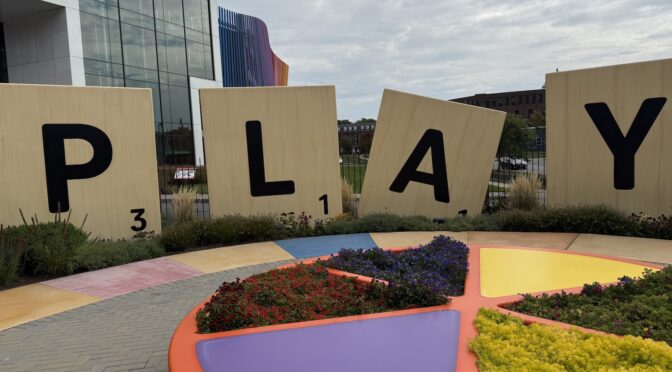
Featured image of giant Scrabble PLAY tiles at The Strong Museum. Photo by Edmond Y. Chang. Used with permission.
–
Abstract:
This collaborative essay brings together seven participants to reflect on their observations and experiences at the 2025 BIPOC Game Studies Conference at The Strong National Museum of Play in Rochester, NY.
Keywords: conference, postcards, BIPOC game studies, The Strong Museum, archives, citational justice, Rochester
–
Edmond Y. Chang, PhD is an Associate Professor of English at Ohio University. His areas of research include technoculture, race/gender/sexuality, queer game studies, feminist media studies, popular culture, and 20/21C American literature, particularly speculative literatures of color and games of color. He is the co-author of Video Games, Literature, and Close Playing: A Practical Guide with Timothy Welsh, and he is the co-editor of Roll with Advantage: Creative, Collaborative, and Critical Responses to Dungeons & Dragons with Suzanne Richardson. Moreover, he is the creator of Tellings, a high fantasy tabletop RPG, and Archaea, a live-action role-playing game. He is also a contributing editor for Gamers With Glasses.
Megan Condis, PhD is an assistant professor of Communication Studies at Texas Tech University. Her book, Gaming Masculinity: Trolls, Fake Geeks, and the Gendered Battle for Online Culture was published by the University of Iowa Press in 2018.
Luke Hernandez is Ph.D. student studying Arts, Technology, and Emerging Communication at the University of Texas at Dallas. His research lies at the intersection of Critical Game Studies, Latinx Studies, and Queer Media Studies. His work focuses on how online marginalized communities thrive throughout games spaces. Luke is also an Aquarius.
Shelly Jones, PhD (they/them) is a Professor of English at SUNY Delhi, where they teach classes in transmedia storytelling, mythology, and writing. Their research examines games through the lenses of intersectional feminism and disability studies. A Pushcart nominee and Best Microfiction finalist, their creative works have been published widely.
Amanda Kporwofa is a Ph.D. student in Communication at the University of Cincinnati whose research explores the intersections of gaming, environmental communication, and technology. She is a game designer from Ghana and the creator of the country’s first sustainability board and mobile games addressing deforestation, illegal mining, and air pollution. Through her work, Amanda designs culturally grounded environmental games for the Global South, using play as a tool for education and social change.
Mirek Stolee is the curator for tabletop games and puzzles at The Strong National Museum of Play and a Texts & Technology Ph.D. Student at the University of Central Florida. His research explores the intersections between analog and digital play, and his dissertation is a local history of escape rooms in Western New York.
Evan Torner, PhD is Associate Professor of German Studies and Niehoff Professor of Film & Media Studies at the University of Cincinnati, where he also serves as Undergraduate Director of German Studies, the Director of the UC Game Lab, and the Program Coordinator of the BFA in Games and Animation, a degree he co-developed. He is co-founder and an Editor of the journal Analog Game Studies. His fields of expertise include East German genre cinema, German film history, critical race theory, science fiction. role-playing game studies, Nordic larp, cultural criticism, and second-language pedagogy.